 Skaltorix
Two Woodbines, twenty kilometres apart
The name came first. The original Woodbine opened in 1874 on Queen Street East, close to Lake Ontario in the city's east end, and for eight decades that was where Toronto went to watch Thoroughbreds. When racing outgrew the site, the operation moved to a new plant on the western edge of the city, out past what was then farmland in Etobicoke, and took the name with it. The old track carried on for years afterwards under a different name before closing for good, and the ground it stood on is now a residential neighbourhood — one of those Toronto details that surprises visitors who assume the current grandstand has always been on Rexdale Boulevard.
What did not move is the race calendar's centre of gravity. The Plate had been run at the old Woodbine since the nineteenth century, and it followed the name west without breaking its run of consecutive years.

1956: a mid-century grandstand
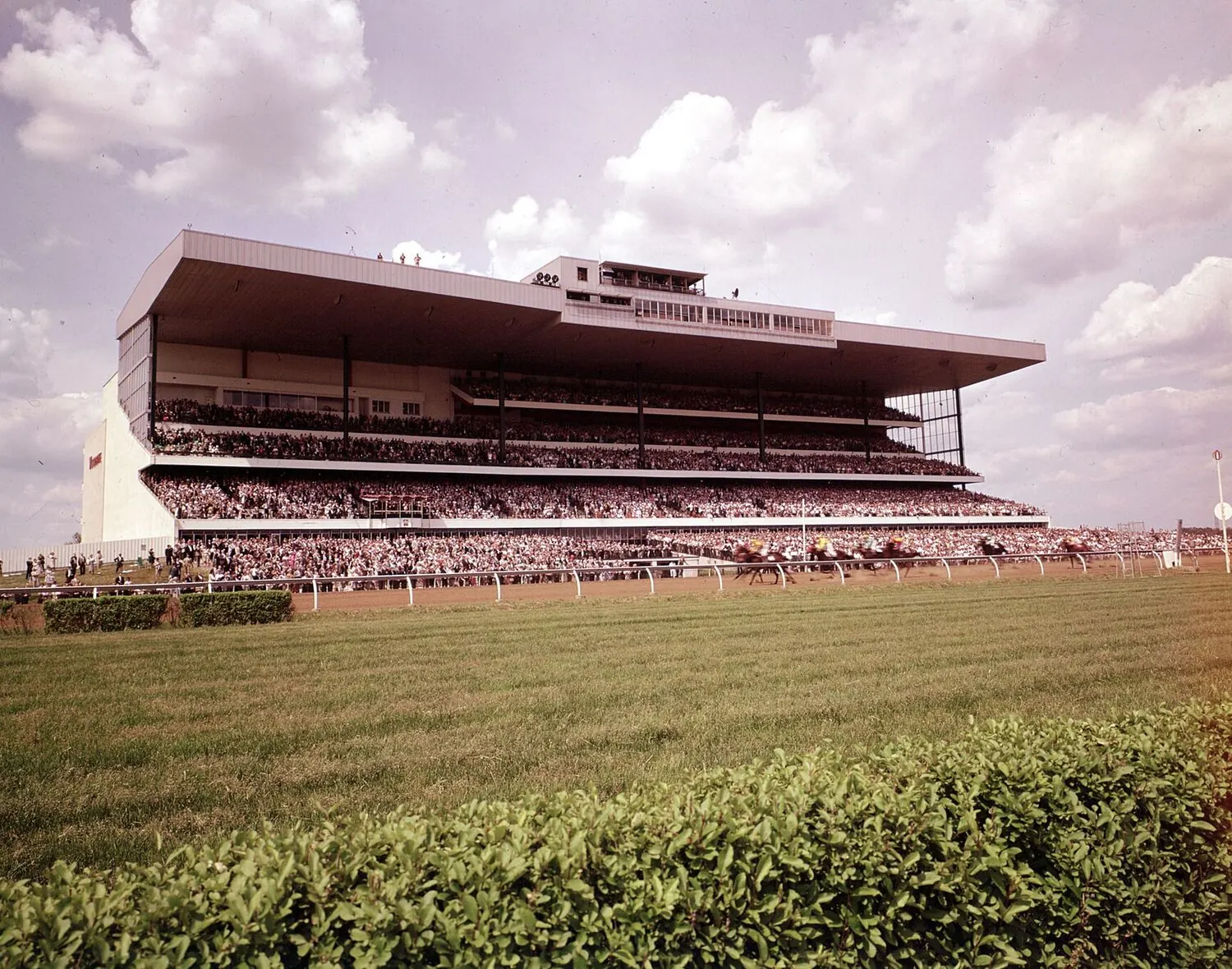
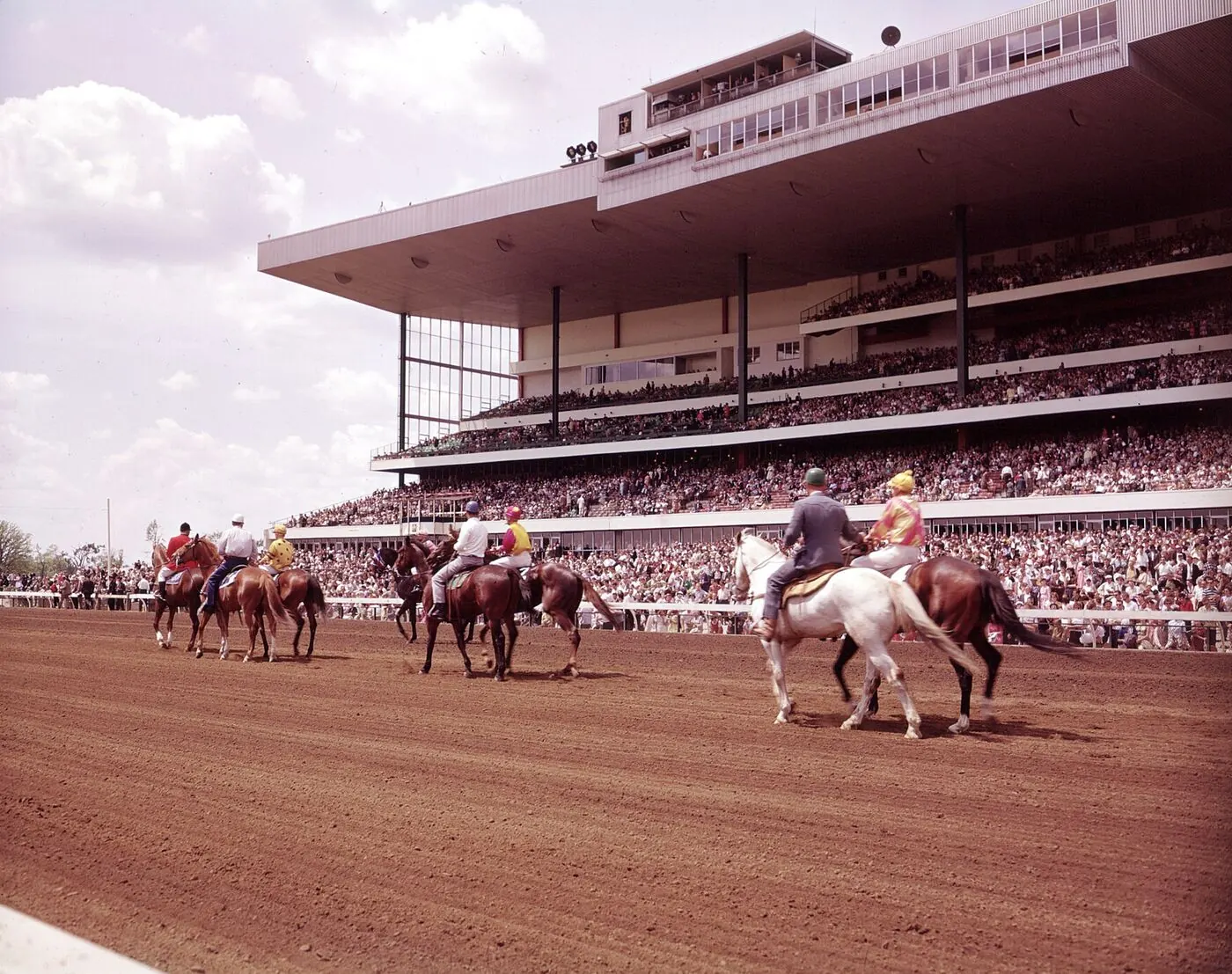
The grounds visitors walk into today opened in 1956, and the architecture is very much of its decade: a long horizontal building, decks stacked in tiers behind a deep cantilevered roof, glass where earlier grandstands had timber, and sightlines arranged so that the crowd looks down the stretch rather than across it. Later renovations added glazing, escalators, screens and a new entrance plaza, but the underlying section — three levels of seating under one broad roof, with the boxes and press positions perched on top — is the same building photographed in the archival images below.
The scale of those early crowds is easy to underestimate now. Photographs from the first decade on Rexdale show every deck filled from rail to roof, hats and light summer suits, and an infield ringed with parked cars stretching to the horizon, in an era when a single afternoon of racing was a mainstream civic event in Toronto rather than a niche one.
The Plate: 1860, and every year since
The race now known as the King's Plate was first run on 27 June 1860 at the Carleton track in Toronto, which makes it the oldest continuously run Thoroughbred race in North America — older than the Kentucky Derby by fifteen years. It has always been restricted to Canadian-bred three-year-olds, and it opens the Canadian Triple Crown.
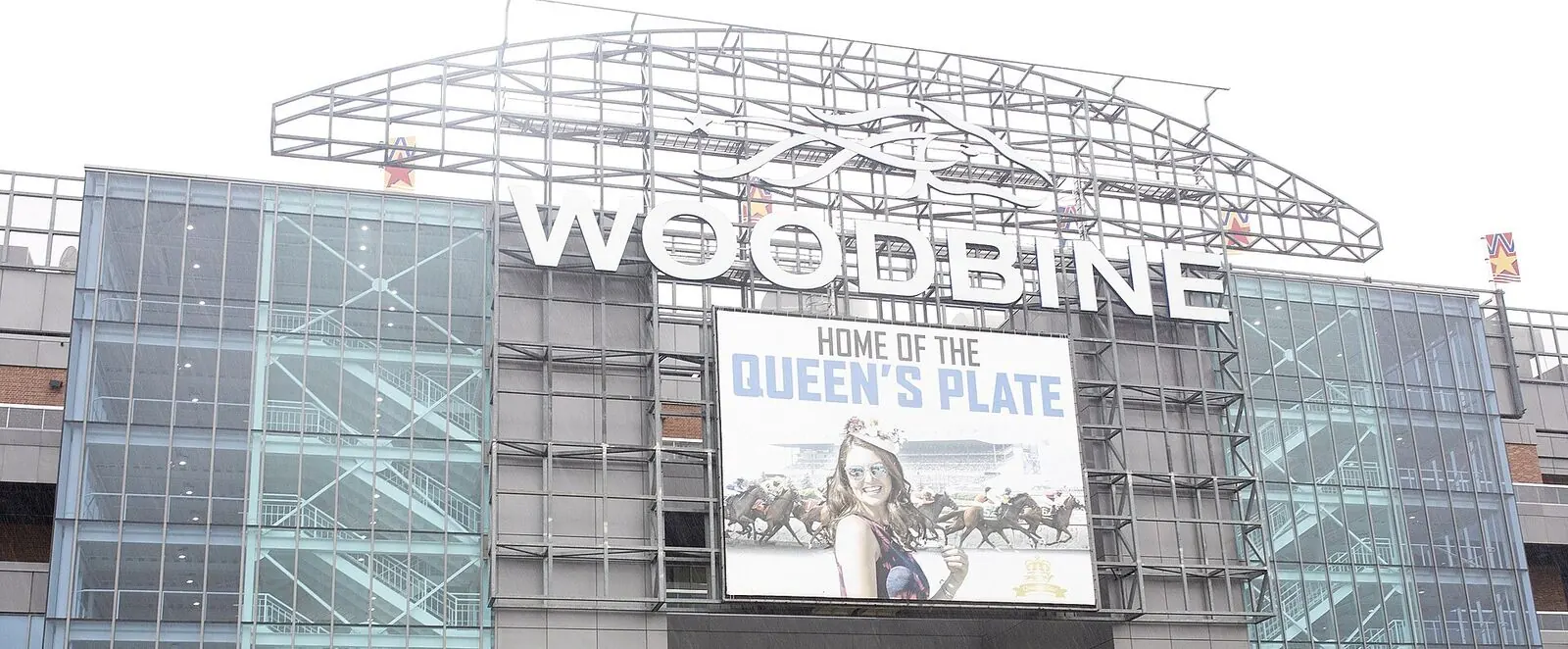
Its name follows whoever is on the throne. It was the Queen's Plate under Queen Victoria until 1901, the King's Plate through the first half of the twentieth century, the Queen's Plate again from 1952 through 2022, and the King's Plate once more from 2023 — the first time it had carried that name since 1951. Signage, souvenirs and photographs from before the change still say Queen's Plate all over the grounds, which is worth knowing if you are trying to date a photo.
The 167th running is scheduled for Saturday 15 August 2026. It is the single busiest afternoon of the Woodbine year: the fullest grandstand, the most formal dress in the crowd, and the longest queues at every dining room in the building.
Three ovals on one property
Woodbine is unusual among North American tracks in how much of its racing happens on grass, and in how the surfaces are nested inside one another.
Main track — one mile, Tapeta
The main oval was resurfaced in 2016 with Tapeta, a synthetic all-weather mix. Practically, that is what lets the season stretch from mid-April to mid-December in a city with real winters.
E.P. Taylor Turf Course — a mile and a half
Opened in 1994 outside the main track and named for Edward Plunket Taylor, the breeder and owner who dominated Canadian racing in the mid-twentieth century. It is one of the largest turf courses on the continent.
Inner turf — seven furlongs
The innermost of the three ovals, used for shorter grass races. Before 1994 the inner grass course was the property's only turf racing surface.
What it means from the stands
Because the courses sit one inside the next, a single afternoon can move between surfaces from race to race, and the field can start well around the bend from where you are sitting.
The rest of the calendar
The Plate is the best-known date, but the autumn is where Woodbine's turf course draws international attention. In 2026 the Woodbine Mile falls on 12 September, on a card that also carries the E.P. Taylor Stakes, the Natalma and the Summer Stakes — the first time all four of the track's Breeders' Cup "Win and You're In" qualifiers share a single afternoon. The Canadian International follows on 3 October at its traditional mile and a half on the E.P. Taylor course.
Between those marquee afternoons sit most of the season's 128 race dates, which are quieter, easier to walk around, and in many ways a better introduction to the place. Our visiting notes cover what that difference feels like on the ground.
Where the history is visible today
- The grandstand's roofline and tiered decks, unchanged in profile since 1956 despite decades of interior renovation.
- The walking ring and paddock area between the entrance and the track, in the same position as in the archival photographs above.
- A life-size statue of jockey Avelino Gomez, a fixture of Woodbine racing in the 1950s and 1960s, standing on the grounds.
- Older Queen's Plate signage and imagery that predates the 2023 name change.
A note on sources
Dates and figures on this page come from public records, the venue's published season and stakes information, and archival photograph collections. Where a detail is disputed or has changed with a renovation, we have left it general rather than guessed. Anything schedule-related should be confirmed at woodbine.com, which is not affiliated with this site.